Asphalt Quantity Estimation
Paving Project Inputs
Engineering Formulas Applied
Theoretical Tonnage: ((L x W) x (T / 12) x Density) / 2000
Total Order: Theoretical Tons x (1 + (Compaction% + Waste%) / 100)
Standard Yield Check: (Total Lbs / (Area in sq yd x T))
Logistics: Total Tons / Truck Capacity
Steps for Accurate Estimation
- Measure the total length and width of the paving area in feet.
- Specify the required compacted lift thickness as per engineering drawings.
- Verify the mix density from the asphalt plant's specific mix design.
- Select the Nominal Maximum Aggregate Size to verify lift thickness limits.
- Include compaction and waste margins to prevent site shortages.
About Asphalt Quantity Estimation
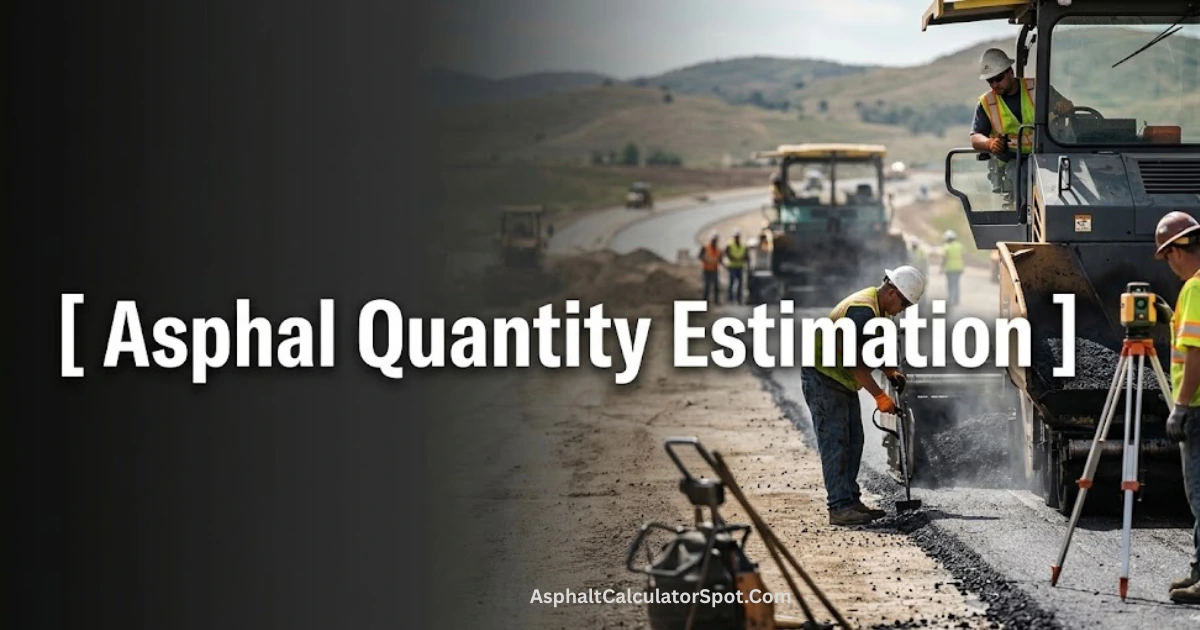
Establishing Precision in Surface Material Requirements
The process of determining exactly how much material is needed for a paving project is a fundamental skill in civil construction. Using an accurate asphalt area calculator is the first step in this journey, as it provides the foundational square footage upon which all volumetric data is built. Precise asphalt quantity estimation ensures that project managers can secure enough material from the plant to complete a continuous paving pass without the risk of cold joints. When estimations are handled loosely, contractors face the dual threats of expensive material overruns or the operational nightmare of a short load at the end of a shift.
This calculator functions by converting spatial dimensions into mass measurements based on the specific gravity of the compacted mixture. Estimators must account for the change in volume that occurs between the loose state in the hopper and the final compacted state on the road. By integrating factors like density, compaction percentage, and waste margins, the tool provides a comprehensive figure that reflects real world conditions. Successful projects rely on this scientific approach to procurement, moving away from rough "rule of thumb" guesses and toward data-driven ordering.
Mitigating Financial Risk Through Engineering Rigor
Manual calculation of asphalt tonnage is notoriously prone to error, particularly when dealing with varying lift thicknesses and non-standard aggregate densities. Every professional estimator knows that an asphalt cost calculator is only as reliable as the tonnage input it receives. If the initial quantity is off by even five percent, the budget for a large highway project can deviate by tens of thousands of dollars. Using a standardized digital tool provides a layer of protection against these mathematical oversights and helps maintain the profitability of the firm.
State and federal paving projects often require strict adherence to technical specifications published by organizations like the National Asphalt Pavement Association. These guidelines mandate specific yield rates and thickness thresholds based on aggregate size. For example, a mix with a 19 mm aggregate requires a much thicker lift than a fine 4.75 mm mix to ensure proper aggregate interlock. Our calculator includes a logic check for these technical thresholds, alerting users when a planned lift is too thin for the chosen aggregate size, which helps prevent premature pavement failure and cracking.
Advanced Analytical Capabilities for Modern Paving Projects
Modern paving involves more than just dumping material; it requires a sophisticated logistical dance between the asphalt plant and the job site. Once the total tonnage is determined, using a truck load calculator becomes essential for scheduling the delivery fleet. This ensures that trucks arrive at intervals that keep the paver moving at a constant speed, which is critical for achieving a smooth, high-quality surface finish. The features of a professional estimation tool include:
- Automatic conversion from volumetric measurements to short tons or metric tonnes.
- Calculations for the number of delivery loads required based on specific truck capacities.
- Yield rate verification to ensure the order aligns with the industry standard of 110 pounds per square yard per inch.
- Thickness-to-aggregate size ratio warnings to maintain structural integrity of the pavement.
- Variable density inputs to accommodate different aggregate types such as limestone or granite.
- Cumulative factor adjustments for compaction and site-specific material waste.
Technological integration allows for the calculation of asphalt concrete requirements across different layers of the pavement structure, from the base course to the surface friction layer. By breaking down the project into these distinct components, estimators can produce more accurate bids and schedules. This level of detail is particularly important for commercial parking lots and municipal streets where irregular shapes and manual raking can lead to higher waste factors than high-speed highway paving.
Optimizing Operational Efficiency and Lifecycle Performance
The utility of a precise quantity estimate extends far beyond the initial procurement phase and into the actual execution of the work. For residential projects, even a simple driveway calculator output should be cross-referenced with tonnage to verify that the base preparation is correct. If the actual tonnage used exceeds the estimation significantly, it often indicates that the stone base was not graded to the proper elevation, requiring more expensive asphalt to fill the voids. Monitoring these variances in real time allows for immediate field adjustments and helps managers refine their future estimates.
Ultimately, a data-driven approach to asphalt quantity estimation builds a historical record of project performance. By comparing theoretical tonnage against actual delivery tickets, paving companies can identify patterns in material consumption and improve their competitive edge in the bidding market. This commitment to accuracy results in higher customer satisfaction, fewer disputes over material billing, and longer-lasting pavement structures. In an industry where material costs represent a significant portion of the total contract value, precision is not just a preference; it is a requirement for long-term business success.
Frequently Asked Questions
What is the industry standard for asphalt density?
While specific mix designs vary, the industry standard for dense-graded hot mix asphalt is typically assumed to be between 145 and 150 lbs per cubic foot. This equates to approximately 2.0 to 2.1 tons per cubic yard.
Why is there a warning for aggregate size and thickness?
Engineering rules require that the lift thickness be at least 3 to 4 times the Nominal Maximum Aggregate Size (NMAS). If the lift is too thin, the aggregate can be crushed by the roller, leading to poor compaction and surface "checking."
How accurate are the truckload estimates?
The truckload calculation is a logistics planning tool based on your input capacity (typically 20 tons for a tri-axle). Actual load weights may vary slightly depending on state bridge laws and individual truck tare weights.
Should I use different factors for residential work?
Yes. Residential driveways often involve more manual raking and irregular edges. It is common to use a higher waste factor (10%) compared to a long highway run (3-5%) to ensure you do not run short on material.